Liquidation Pallets vs. Wholesale Distributors: Which Is the Better Deal for Your Business?
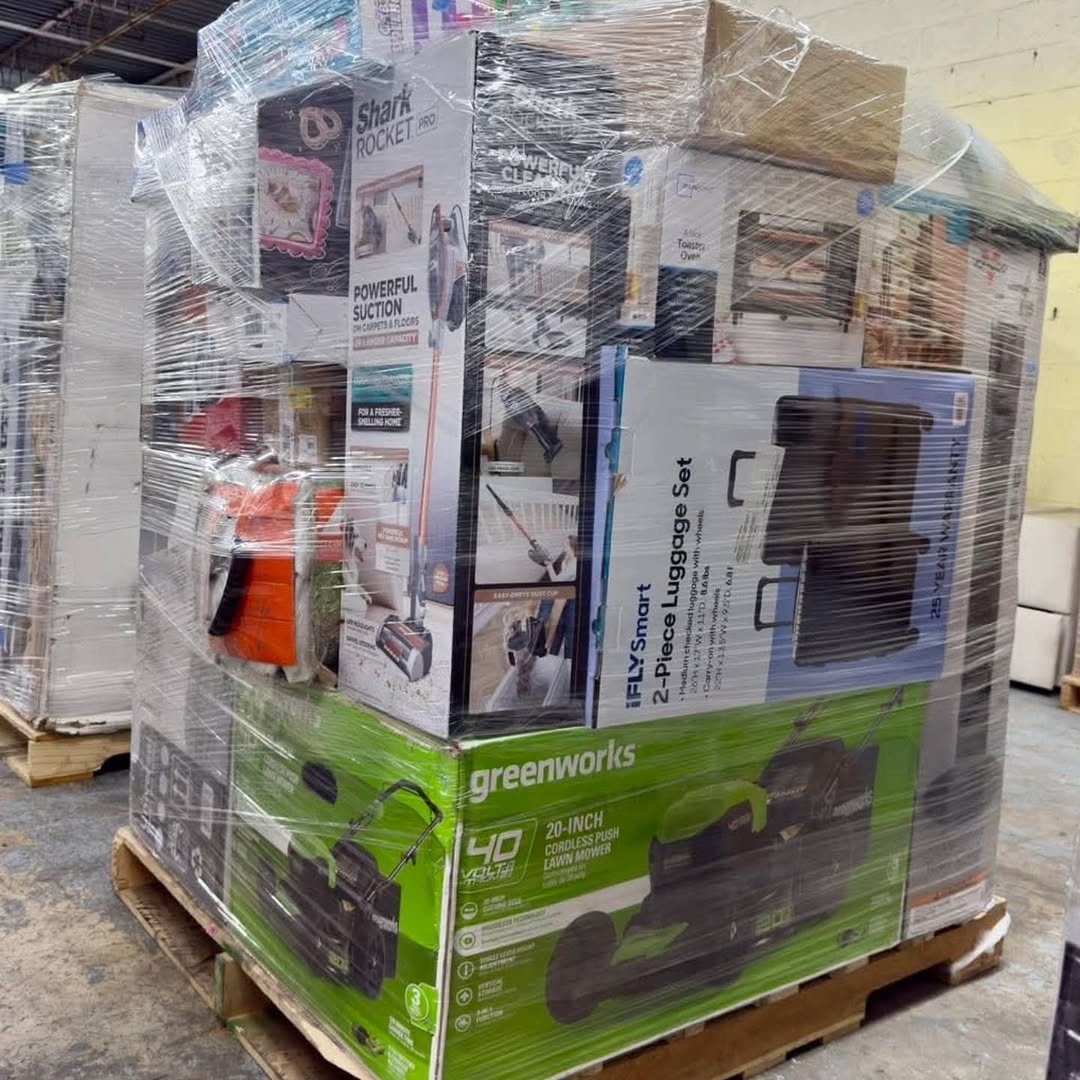
If you’re sourcing inventory to resell, you’ve probably run into two very different paths: buying liquidation pallets from retailers like Amazon, Walmart, and Sam’s Club, or buying from a traditional wholesale distributor. Both can work — but they solve different problems, and picking the wrong one for your business model is one of the fastest ways to tie up cash in inventory you can’t move. Here’s how the two actually compare on cost, risk, and predictability.
📦 Liquidation Options Worth Comparing
Liquidation Pallets vs. Wholesale Buying: The Core Difference
Wholesale distributors sell you new inventory at a fixed, published discount off retail — usually 20–50% off — with predictable stock and no surprises. Liquidation pallets sell you a bulk lot of customer returns, overstock, or shelf-pulled merchandise at a much steeper discount, often 70–90% off retail value, but with more variability in condition and contents. In short: wholesale trades a smaller discount for certainty, and liquidation trades some certainty for a much bigger margin.
Cost Comparison: What You’re Actually Paying Per Unit
The math looks very different depending on which route you take. Here’s a side-by-side using typical numbers from each model.
| Factor | Liquidation Pallets | Wholesale Distributor |
|---|---|---|
| Typical discount off retail | 70–90% | 20–50% |
| Minimum order | 1 pallet (often $200–$700) | Often case packs or MOQ contracts |
| Item condition | New, like-new, or customer-returned mix | New, factory-fresh |
| Inventory predictability | Varies by manifest type | High — you choose exact SKUs |
| Best margin potential | Higher, but less consistent | Lower, but repeatable |
Inventory Predictability and Manifests
The biggest practical difference between the two models is how much you know before you buy. A wholesale distributor gives you a catalog and you pick exact SKUs and quantities. A liquidation pallet gives you either a detailed manifest (a list of what’s supposed to be inside, with estimated retail value) or, on unmanifested pallets, a general description and a photo. Manifested pallets close most of that predictability gap, which is why beginners should generally start there.
| Sourcing Type | What You Know Before Buying | Good Fit For |
|---|---|---|
| Wholesale catalog | Exact SKU, quantity, and condition | Retailers who need consistent restocks |
| Manifested liquidation pallet | Itemized list with estimated retail value | Resellers who want margin with less guesswork |
| Unmanifested liquidation pallet | General category and photos only | Experienced buyers comfortable with variance |
Risk, Returns, and Quality Control
Wholesale purchases come with vendor accountability — if something’s wrong with the shipment, you have a clear return or replacement process. Liquidation pallets are typically sold as-is, final sale, which shifts the quality-control burden onto you. That’s the trade-off for the steep discount: you’re being paid, in effect, to sort, test, and grade the merchandise yourself.
| Risk Factor | Liquidation Pallets | Wholesale Distributor |
|---|---|---|
| Return policy | Usually final sale, as-is | Standard vendor return terms |
| Damaged or missing items | Possible — budget for a shrinkage % | Rare, and typically covered |
| Time investment | Higher — sorting, testing, cleaning | Lower — inventory arrives sale-ready |
| Capital efficiency | High if managed well | Moderate, more predictable |
Which Model Fits Your Business?
Neither option is universally better — the right choice depends on what you’re building.
| Your Situation | Better Fit |
|---|---|
| Starting out, testing what sells, limited capital | Manifested liquidation pallets |
| Running a bin store or flea market booth | Liquidation pallets (volume + margin) |
| Need the exact same SKU restocked monthly | Wholesale distributor |
| Selling on Amazon FBA with strict listing requirements | Wholesale distributor (condition consistency matters) |
| Scaling a resale business and want higher margins | Liquidation truckloads once you have sorting systems |
💡 Pro Tip: You Don’t Have to Choose Just One
Many established resellers run both. Liquidation pallets fund the higher-margin side of the business, while a small wholesale account fills in fast-selling, low-risk staples that customers expect to always be in stock.
Key Takeaways
- Liquidation pallets offer steeper discounts (70–90% off retail) but more variability in condition and contents
- Wholesale distributors offer smaller discounts (20–50%) with predictable, factory-new inventory
- A manifest closes most of the predictability gap on liquidation pallets — always look for one as a beginner
- Liquidation purchases are typically final sale, so budget time for sorting, testing, and a small shrinkage allowance
- Many successful resellers use both models together rather than picking just one
Frequently Asked Questions
Is it cheaper to buy liquidation pallets or wholesale?
Liquidation pallets are almost always cheaper per unit — often 70–90% off retail versus 20–50% off with wholesale — but that price reflects the added work of sorting and grading the merchandise yourself.
Can I return items from a liquidation pallet if something’s wrong?
Most liquidation pallets are sold as final sale. That’s why choosing a supplier that provides a detailed, accurate manifest matters — it reduces surprises before the pallet even ships.
Do wholesale distributors have minimum order requirements?
Many do, often in the form of case packs or minimum order values, which can require more upfront capital than a single liquidation pallet.
Which option is better for a brand-new reseller?
A small, manifested liquidation pallet is usually the better starting point — it keeps capital risk low while still teaching you how to price, list, and sell across categories.
Ready to Compare the Numbers Yourself?
Browse manifested liquidation pallets from $200 and see the savings for yourself.