
Pallet vs Truckload: Which Should You Buy for Your Liquidation Business?
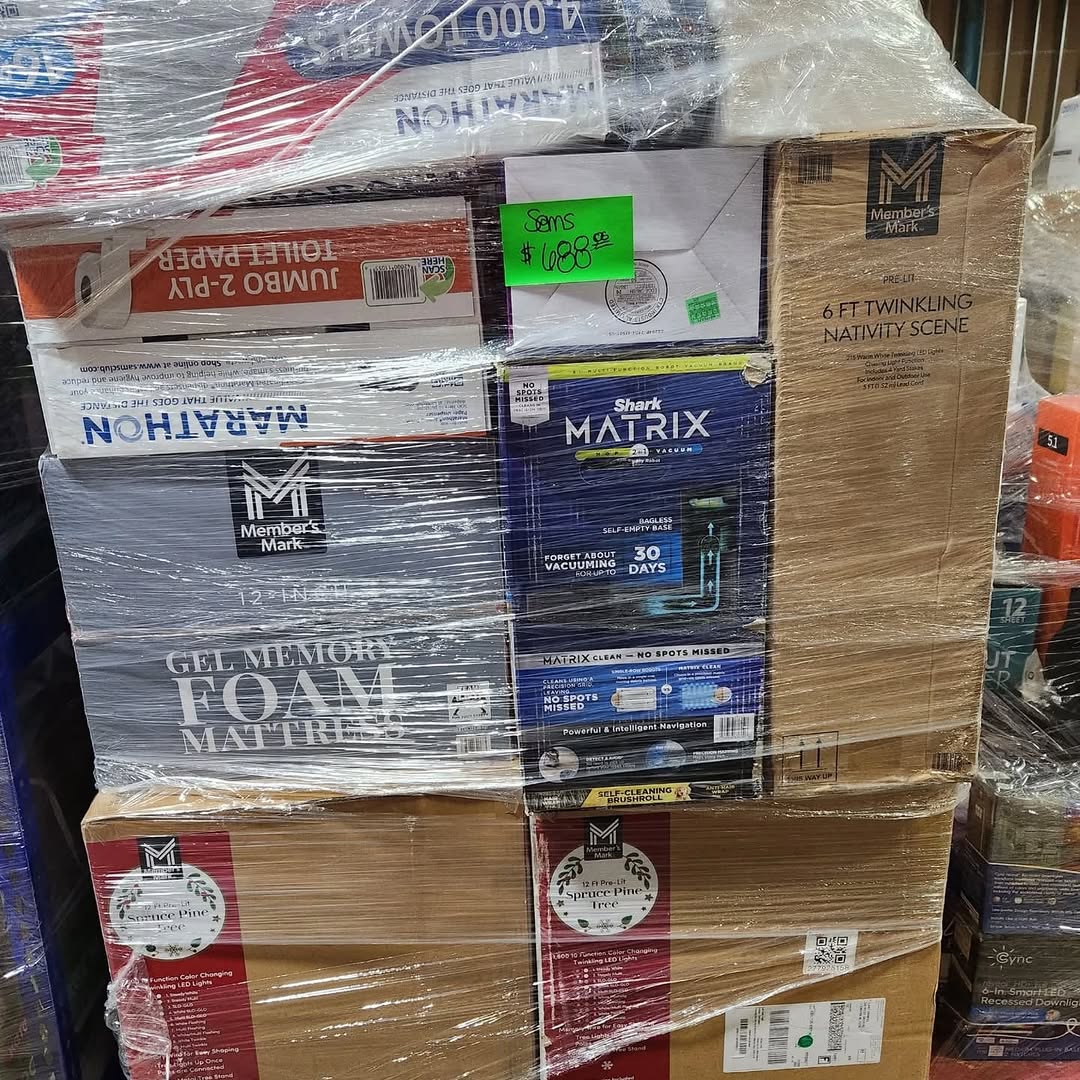
At some point, every reseller asks the same question: should I keep buying single pallets, or step up to a full truckload? The honest answer is that neither is universally better — it depends on your capital, your storage space, and how much time you can dedicate to processing inventory. This guide breaks down the real differences so you can decide with numbers instead of guesswork.
🚚 Truckloads & Pallets In Stock
The Core Difference
A pallet is one unit of inventory — a single stack of boxed or shrink-wrapped merchandise, typically 40–150 items. A truckload is multiple pallets shipped together, usually 20–30 pallets, sold as one bulk purchase at a steep per-pallet discount compared to buying each one individually. Our Sam’s Club truckload, for example, includes 24 pallets of general merchandise and electronics for $14,950 — that works out to roughly $623 per pallet, well below what most single pallets of similar quality cost on their own.
Pallet vs Truckload: Side-by-Side Comparison
| Factor | Single Pallet | Truckload |
|---|---|---|
| Typical Cost | $200 – $2,000 | $10,000 – $20,000+ |
| Storage Needed | Garage, spare room, small storage unit | Warehouse or large storage unit |
| Per-Pallet Cost | Full price | 20–40% lower per pallet |
| Time to Process | Days | Weeks to months |
| Risk if Inventory Underperforms | Low — limited capital exposed | High — large capital tied up at once |
| Best For | Beginners, side-hustle sellers, testing new categories | Established resellers, bin stores, wholesalers |
The Real Math: Cost Per Pallet at Scale
The main financial argument for truckloads is the per-pallet discount. Here’s how it plays out using real numbers from current inventory.
| Buying 24 Single Pallets | Buying 1 Truckload (24 Pallets) | |
|---|---|---|
| Estimated total cost | ~$19,200 (at ~$800 avg/pallet) | $14,950 |
| Cost per pallet | ~$800 | ~$623 |
| Approx. savings | — | ~$4,250 (22% less) |
That’s a meaningful discount — but it only pays off if you can actually move 24 pallets worth of inventory before storage costs, spoiled seasonal items, or tied-up capital start eating into that savings.
💡 Pro Tip: Calculate Your “Time to Cash” Before You Buy a Truckload
Don’t just calculate profit per pallet — calculate how many weeks it will take you to sell through the whole load. If a single pallet takes you 4 weeks to sell through, a 24-pallet truckload isn’t a one-month project, it’s closer to a 6–12 month inventory pipeline unless you have help, multiple sales channels, or a storefront to move volume faster.
When a Single Pallet Is the Smarter Buy
- You’re testing a new category — buy one electronics or clothing pallet before committing truckload-level capital to a niche you haven’t sold in before
- You’re storage-limited — a spare room or single-car garage can’t realistically hold 20+ pallets
- You’re a solo seller — if you’re the only one photographing, listing, and shipping, a truckload will sit half-processed for months
- Cash flow matters more than margin — smaller purchases mean faster turnaround and more frequent cash-in-hand
When a Truckload Makes Sense
- You already have a proven sales process — you know your average sell-through time and profit margin from pallet purchases
- You run a bin store or physical retail space — high foot traffic can move truckload volume in days, not months
- You have warehouse or large storage access — 20+ pallets take up serious square footage
- You want the lowest possible per-unit cost — and have the capital to absorb the larger upfront spend
A Middle-Ground Strategy
Many experienced resellers don’t choose one or the other — they scale gradually. Start with single pallets to learn a category and build a repeatable sales process, reinvest profits into 2–3 pallets at a time, and only step up to a truckload once you’ve proven you can consistently sell through inventory at a pace that makes the storage and capital commitment worth it.
Key Takeaways
- Truckloads typically offer a 20–40% lower cost per pallet, but require far more capital, storage, and processing time
- Single pallets are the safer choice for beginners, category testing, and solo sellers
- Calculate your “time to cash” — how long it will realistically take to sell through the load — before buying a truckload
- Scaling from pallets to truckloads gradually, once you have a proven sales process, reduces risk significantly
Frequently Asked Questions
Is a truckload always cheaper per pallet than buying pallets individually?
Usually, yes — truckloads typically run 20–40% cheaper per pallet. But that discount only translates to profit if you can sell through the inventory in a reasonable timeframe.
How much storage space does a truckload actually need?
Most truckloads contain 20–30 pallets, which typically requires a dedicated storage unit or small warehouse space — not something that fits in a garage or spare room.
Should a beginner ever buy a truckload?
Generally not for a first purchase. It’s safer to start with single pallets to learn pricing, sourcing, and sell-through speed before committing the larger capital a truckload requires.
Can I mix pallet types within a truckload?
It depends on the specific truckload listing. Some, like general merchandise truckloads, already contain a mix of categories, while others (like a tool-focused truckload) are more specialized.
Ready to Scale Up?
Compare single pallets and full truckloads side-by-side and find the right fit for your business.